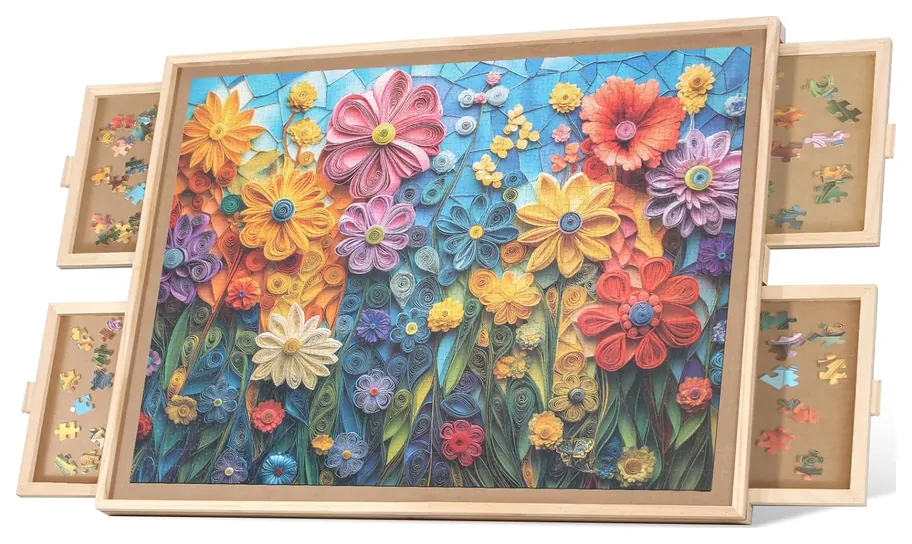
BuilderButler’s selected lineup includes a compact four-drawer rotating board, a 1,500-piece tabletop easel that rotates and tilts, and a short-legged table with three tilt settings. The compact board fits a smaller surface if the finished puzzle fits inside its frame. The easel keeps the work on the furniture you already have and adds angle adjustment. The short-legged table suits a lower seating arrangement where its legs have room to stand securely. Compare listed dimensions, drawer clearance, and how each model rests on your existing furniture before buying.
BuilderButler’s compact rotating board is designed for 1,000-piece jigsaws on a tabletop. Its wood frame and four drawers keep the working area together, and a turning base changes which edge is in front of you. Compare the finished puzzle dimensions with the inner work area, particularly for wide or panoramic shapes.
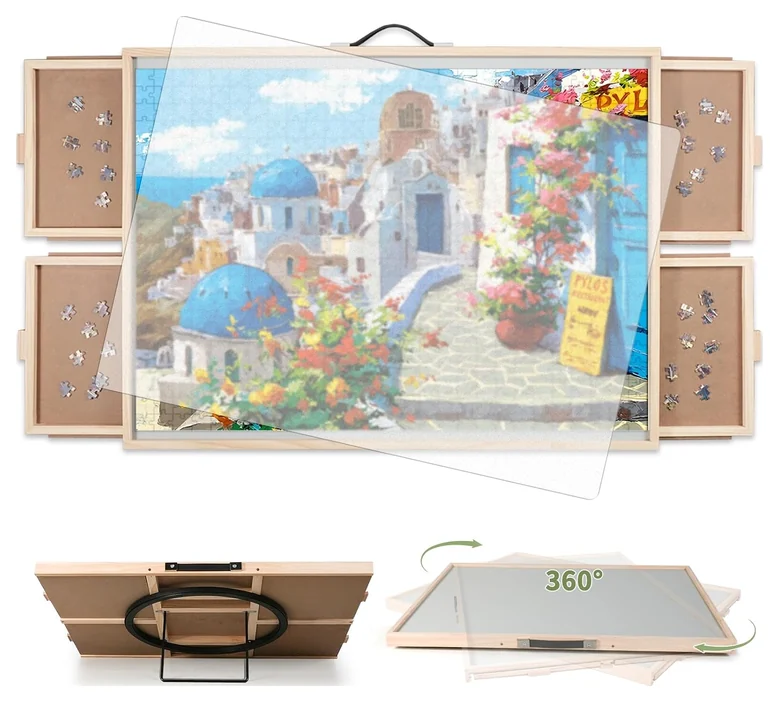
The BuilderButler 1,500-piece tilting and rotating board is shaped as a tabletop easel, with four drawers and a cover. It gives the work surface a flat and raised position on a table you already own. Set aside room at the back for the raised position and around the drawers for sorting.
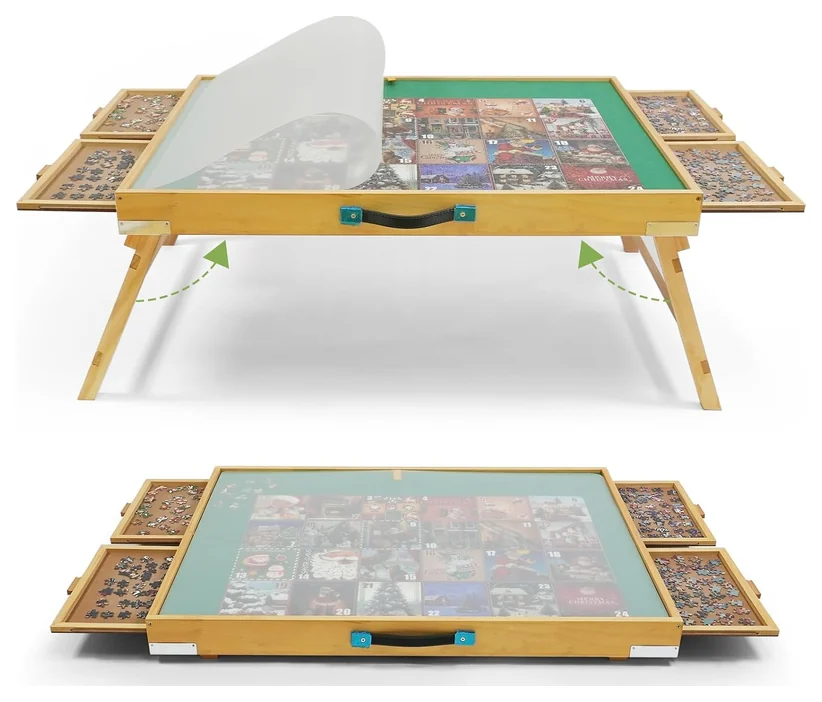
BuilderButler’s 1,500-piece Three-Angle Puzzle Table uses short legs to raise a wooden work surface. It has three tilt settings, four sorting drawers, and a cover. Consider it for a low seating arrangement with a stable supporting surface, and check that the legs and open drawers have enough room on either side.
A 1500-piece tabletop easel with rotation, tilt, four sorting drawers and a cover. The same work surface can be repositioned when you switch between working across the board and working close to one edge.
This wooden puzzle table has legs, three tilt settings, four drawers and a cover. The raised surface is useful for working from a sofa or a lower seat when the leg setup fits your space.
For a low, raised work surface where a full wheeled stand would take up too much floor space.
Which BuilderButler puzzle table setup fits your room?
1000-Piece Rotating Puzzle Board
Some panoramic 1000-piece puzzles are wider than this board. Check the assembled dimensions on the puzzle box and allow room for the rotating corners.
1500-Piece Tilting & Rotating Puzzle Board
Check your table depth and leave space to pull the drawers out. Confirm the cover and work-area dimensions for this exact version.
1500-Piece Three-Angle Puzzle Table
Compare leg clearance with where you intend to sit. Adjust the angle before sorting loose pieces, and confirm the table is steady on its supporting surface.
Which BuilderButler puzzle board is for 1,000-piece puzzles?
The BuilderButler 1000-Piece Rotating Puzzle Board is the 1,000-piece option in this selection. It has four drawers and listed dimensions of 28.74 × 20.94 inches. Measure the finished puzzle and leave clearance around the corners for the board to turn.
Which BuilderButler board can rotate and tilt?
The BuilderButler 1500-Piece Tilting & Rotating Puzzle Board has both adjustments. It is a tabletop easel with four sorting drawers and a cover. Check the depth behind the board and the space on either side before deciding where to use it.
How many tilt settings does the BuilderButler three-angle table have?
The BuilderButler 1500-Piece Three-Angle Puzzle Table has three tilt settings. The exact degree values were not confirmed, so use the seller’s current information if a specific angle matters. Set the angle before putting loose pieces on the work surface.
Does the BuilderButler three-angle table have legs and a cover?
Yes. The selected BuilderButler Three-Angle Puzzle Table includes legs, four sorting drawers, and a cover. Its short-legged design needs a stable supporting area. Check enough clearance for the legs and for removing the drawers in the spot you plan to use.
How much surface space do the selected BuilderButler boards require?
The listed dimensions are 28.74 × 20.94 inches for the compact rotating board and 34.25 × 25.2 inches for the 1,500-piece tilting and rotating board. Allow more room for turning and opening drawers. Check the inside work dimensions if your puzzle is near either limit.